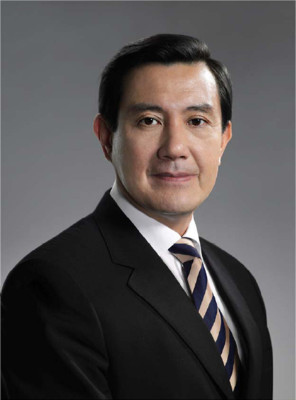
Ma Ying-jeou, a towering figure in Taiwanese politics, served as the President of the Republic of China (Taiwan) from 2008 to 2016. His tenure was marked by significant policy shifts, particularly concerning cross-strait relations, and a public persona often associated with integrity. As with many prominent public figures, a common question that arises is: what is Ma Ying-jeou's net worth, and how did he accumulate his fortune?
Estimates for Ma Ying-jeou's net worth vary, with some reports suggesting around $3 million, while more recent assessments, notably as of 2025, place it closer to $10 million. This difference often reflects the dynamic nature of asset valuation, the timing of estimates, and the inclusion of various income streams over a lengthy career. To truly understand his financial standing, one must delve into his extensive career trajectory, from his early days in academia and law to his high-profile political roles and post-presidency engagements.
From Academia to Public Service: The Genesis of a Political Fortune
Born in Kowloon, British Hong Kong, in July 1950, Ma Ying-jeou's intellectual journey laid a robust foundation for his future success. He pursued higher education with distinction, earning a Bachelor of Laws from National Taiwan University. His academic pursuits then led him abroad, where he obtained a Master of Laws from New York University Law School and a Doctor of Juridical Science (J.D.S.) from Harvard Law School. This elite educational background not only provided him with a deep understanding of law and governance but also opened doors to prestigious opportunities.
Before fully immersing himself in politics, Ma Ying-jeou gained valuable experience working on Wall Street. This exposure to the financial world, even if brief, would undoubtedly have imparted crucial insights into economics and investment principles. Upon his return to Taiwan, he quickly transitioned into public service, working for President Chiang Ching-kuo, a pivotal entry point into the highest echelons of Taiwanese politics. He also served in the Republic of China Navy Military logistics from 1972 to 1974.
His political career burgeoned within the Kuomintang (KMT) party. Ma held several significant ministerial positions, starting as the Minister of the Research, Development and Evaluation Commission of the Executive Yuan (1988-1991). He then served as Deputy Minister of the Mainland Affairs Council (1991-1993), followed by a tenure as Minister of Justice (1993-1996), where he championed anti-corruption efforts. These roles, while not directly leading to vast personal wealth, established his reputation, built extensive networks, and provided a steady income, laying the groundwork for greater responsibilities and the associated financial benefits. Indeed, his journey underscores the dynamic interplay between ambition and opportunity, a path detailed further in Ma Ying-jeou's Career Wealth: From Academia to Presidential Fortune.
Navigating the Corridors of Power: Mayoral and Presidential Earnings
Ma Ying-jeou's path to the presidency included a highly successful eight-year term as the Mayor of Taipei from December 1998 to December 2006. As mayor of Taiwan's capital city, he commanded a substantial salary and managed a significant administrative budget, further solidifying his political influence and financial standing.
His ultimate ascent to the presidency in May 2008, succeeding Chen Shui-bian, and his subsequent re-election in 2012, marked the pinnacle of his political career. As President of the Republic of China, Ma Ying-jeou's income consisted of a presidential salary and allowances. While these figures are often public, they are designed to be commensurate with the office's immense responsibilities rather than to facilitate extreme personal wealth accumulation during the term.
However, Ma's political journey was not without controversy, which occasionally touched upon his financial conduct. A notable incident involved allegations that one of his aides forged receipts to claim his expenses as Taipei mayor. Ma Ying-jeou publicly apologized for the scandal. He defended his actions by arguing that, like most government officials at the time, he regarded the special expense account as a "supplemental salary" for personal expenses incurred during official duties, asserting that his use of the account was legal. This incident highlights the complexities surrounding public officials' finances, where the lines between legal entitlements and public perception can sometimes blur. While he maintained legality, the public scrutiny undeniably impacted his image, though it did not derail his presidential ambitions.
Sustaining Influence and Income: Post-Presidency Endeavors
Leaving the highest office does not mean an end to a former president's income streams. Like many former heads of state globally, Ma Ying-jeou benefits from government pensions, a standard provision designed to support former leaders. These pensions, combined with fees from speaking engagements, constitute a significant and stable source of income.
After his presidency, Ma Ying-jeou did not retreat from public life. He returned to academia and actively engaged in public speaking, both domestically and internationally. His focus on promoting cross-strait dialogues and international peace initiatives has positioned him as a respected voice on regional stability. Speaking engagements at universities, conferences, and forums around these critical topics often command substantial honoraria, contributing significantly to his financial portfolio.
Beyond traditional post-presidency activities, Ma Ying-jeou has also ventured into various business initiatives. These ventures, particularly those centered on educational and cultural exchanges, align with his long-standing personal beliefs in fostering goodwill and understanding between neighboring countries. Such activities might include consultancy roles, participation in educational programs, or leadership positions in cultural exchange organizations, all of which can be financially rewarding. His investments are generally aligned with these principles, suggesting a portfolio that may include stakes in companies or initiatives that support cross-cultural understanding or educational technology. For a deeper dive into the financial aspects, including his investments, pensions, and the surrounding political controversies, read Ma Ying-jeou Net Worth: Investments, Pensions, and Political Controversies.
Understanding the Net Worth: A Multifaceted Financial Picture
The varying estimates for Ma Ying-jeou's net worth — from $3 million to $10 million — underscore the inherent challenges in precisely quantifying a public figure's wealth. These discrepancies can arise from several factors:
- Valuation Timing: Estimates made at different points in time will reflect market fluctuations and changes in assets.
- Scope of Assets: Some estimates might only account for publicly declared assets, while others might attempt to include private investments, real estate, and other less transparent holdings.
- Income Streams: The inclusion or exclusion of future earnings from pensions, speaking engagements, or business ventures can significantly alter the total.
- Spousal Assets: While Ma is married to Christine Chow and they have two daughters, it's not always clear if individual net worth estimates include combined marital assets or solely the individual's.
Ultimately, Ma Ying-jeou's financial accumulation is a testament to a long and distinguished career in public service, complemented by strategic post-presidency activities. Political salaries, while substantial at the highest levels, rarely result in immense personal fortunes on their own. Instead, it is the combination of stable income over decades, significant pensions, high-profile speaking engagements leveraging his presidential legacy, and calculated investments—many aligned with his personal and political philosophies—that contribute to an estimated net worth in the multi-million dollar range.
His financial trajectory reflects not a singular windfall but a steady accumulation derived from intellectual capital, political influence, and strategic engagement in the public and private sectors. His ability to parlay a distinguished career into continued influence and financial stability is a common thread among many former world leaders.
In conclusion, Ma Ying-jeou's net worth, estimated to be around $10 million as of recent reports, is a culmination of a successful and lengthy political career, substantial government pensions, lucrative public speaking engagements, and strategic investments often tied to educational and cultural exchange initiatives. While the exact figures of his fortune may be subject to varying interpretations and disclosures, his financial standing firmly places him among the comfortably affluent, a reflection of a life dedicated to public service and sustained by prudent post-presidency endeavors.
